Double-height living rooms create an immediate sense of grandeur and spaciousness that single-story ceilings simply cannot match. These soaring spaces, with their dramatic vertical dimensions, offer unique opportunities for architectural expression and interior design innovation. Whether you’re planning a new home or renovating an existing space, understanding how to maximise the potential of double-height wall designs can transform your living area into a breathtaking sanctuary.
The challenge with double-heightṣ living room design lies not just in filling the vertical space, but in creating a cohesive, balanced environment that feels both impressive and inviting. From modern minimalist approaches to luxurious traditional styles, the right double-height wall design ideas can define your home’s character while enhancing functionality and comfort.
These are the top 10 Double-Height Wall Design Ideas for the Living Room:-
The challenge with double-height living room design lies not just in filling the vertical space, but in creating a cohesive, balanced environment that feels both impressive and inviting. From modern minimalist approaches to luxurious traditional styles, the right double-height wall design ideas can define your home’s character while enhancing functionality and comfort.
1. Banana Leaf Design
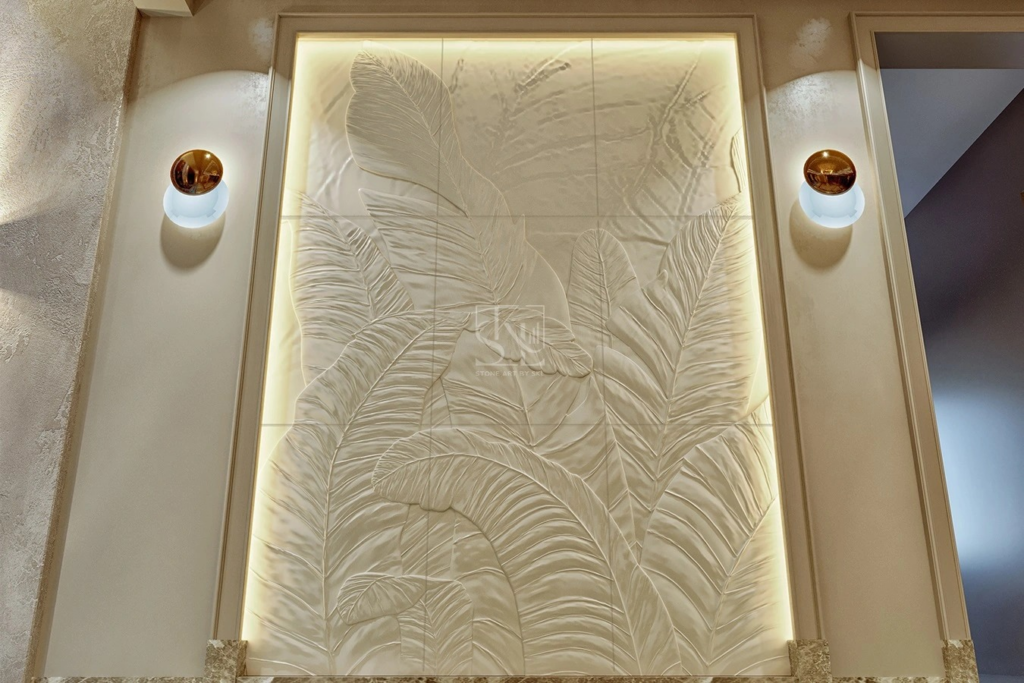
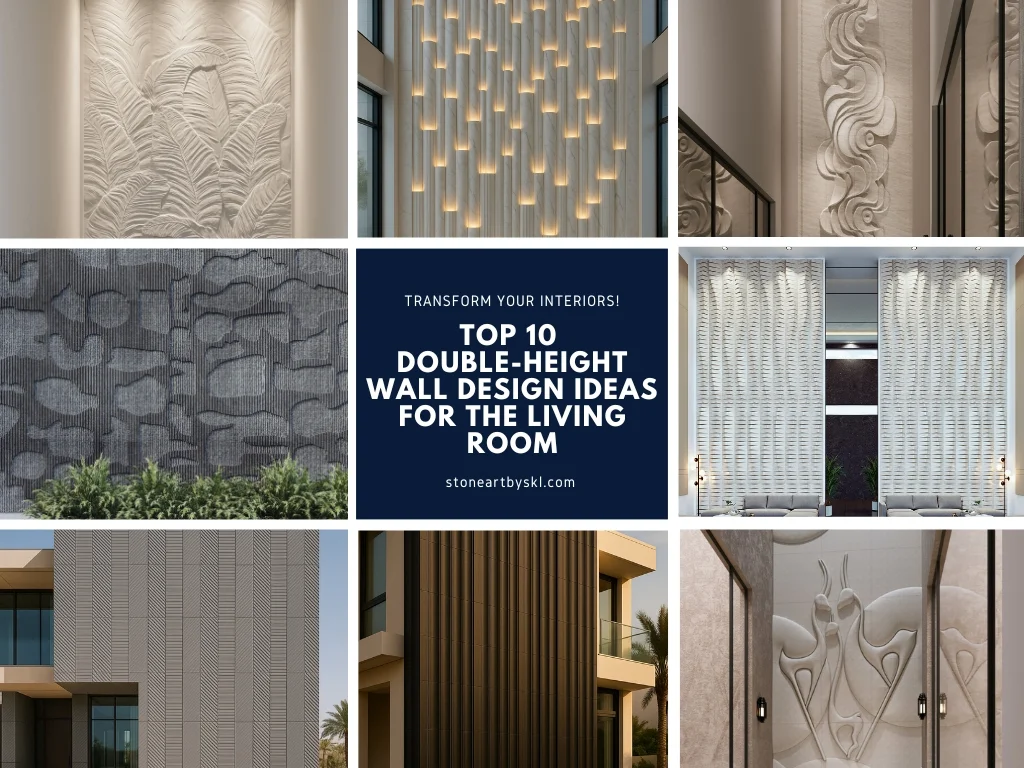
The Banana Leaf Design brings tropical elegance to interior double-height wall design through organic, flowing patterns inspired by nature’s most graceful foliage. This design features elongated, curved elements that mimic the natural veining and contours of banana leaves, creating vertical movement that accentuates ceiling height. Crafted in natural stone with varying surface depths, the design casts beautiful shadows throughout the day, adding dynamic visual interest. Perfect for luxury double-height living room settings, this biophilic approach introduces calming natural elements while maintaining sophisticated aesthetics. The design works exceptionally well as a feature wall behind seating areas or as an accent near entryways.
2. Marble Glow Flutes Design
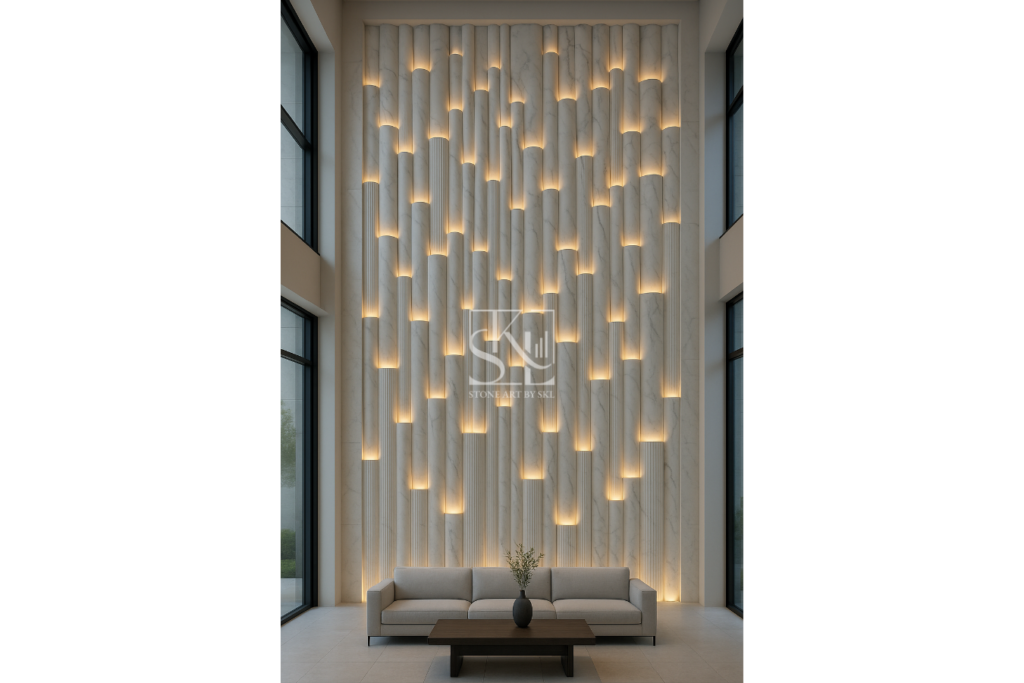
The Marble Glow Flutes Design adds a warm and striking look to double-height wall design by combining vertical fluted stone patterns with soft integrated lighting. This design features cylindrical and ribbed marble elements arranged at varied heights, creating depth and a strong vertical flow that highlights the full height of the wall. The concealed lighting between the flutes produces a gentle glow, enhancing the natural marble texture and creating a calm yet impactful atmosphere, especially in evening settings. Ideal for luxury double-height living rooms, hotel lobbies, or entrance foyers, this design works beautifully as a statement wall behind seating areas or in grand entry spaces, offering a perfect balance of light, texture, and stone detailing.
3. Petal Layers Design
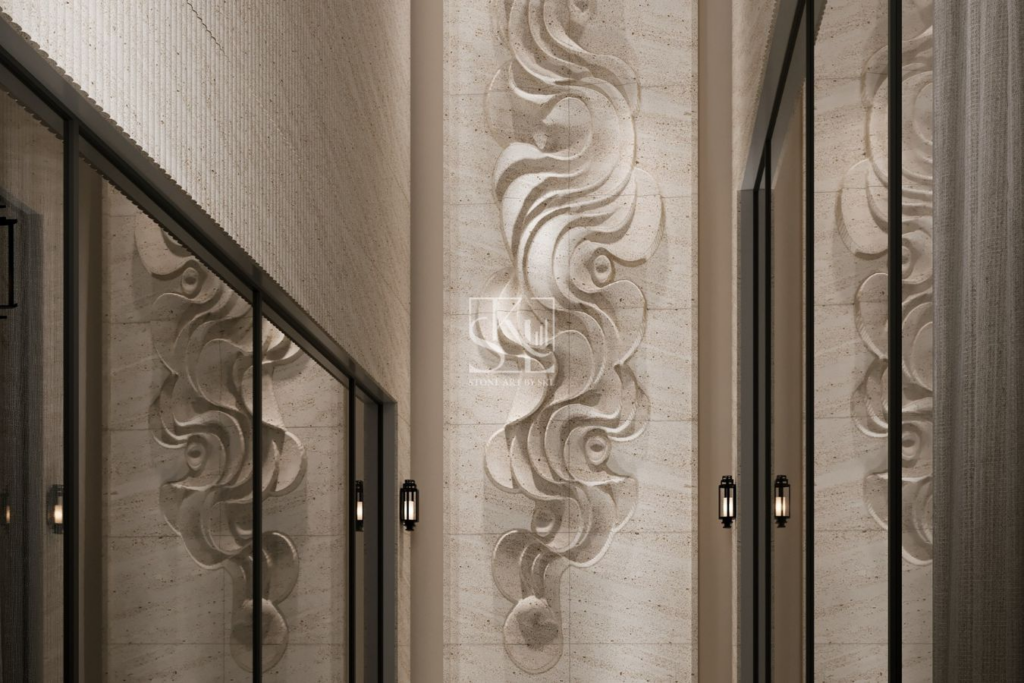
Petal Layers Design introduces soft, romantic aesthetics to double-height living room design through delicate, overlapping forms reminiscent of flower petals. Each layer creates gentle shadows and subtle depth, forming an elegant textured surface that softens the imposing scale of tall walls. The design’s flowing, organic shapes contrast beautifully with angular furniture and architectural elements, creating visual balance. Available in various natural stone finishes, from pristine white marble to warm beige limestone, this design adapts to both traditional and contemporary interiors. Perfect for creating feminine, sophisticated atmospheres in luxury double-height living room spaces, the Petal Layers brings artisanal craftsmanship and natural beauty together seamlessly.
4. Semi-Chiselled Wall Design
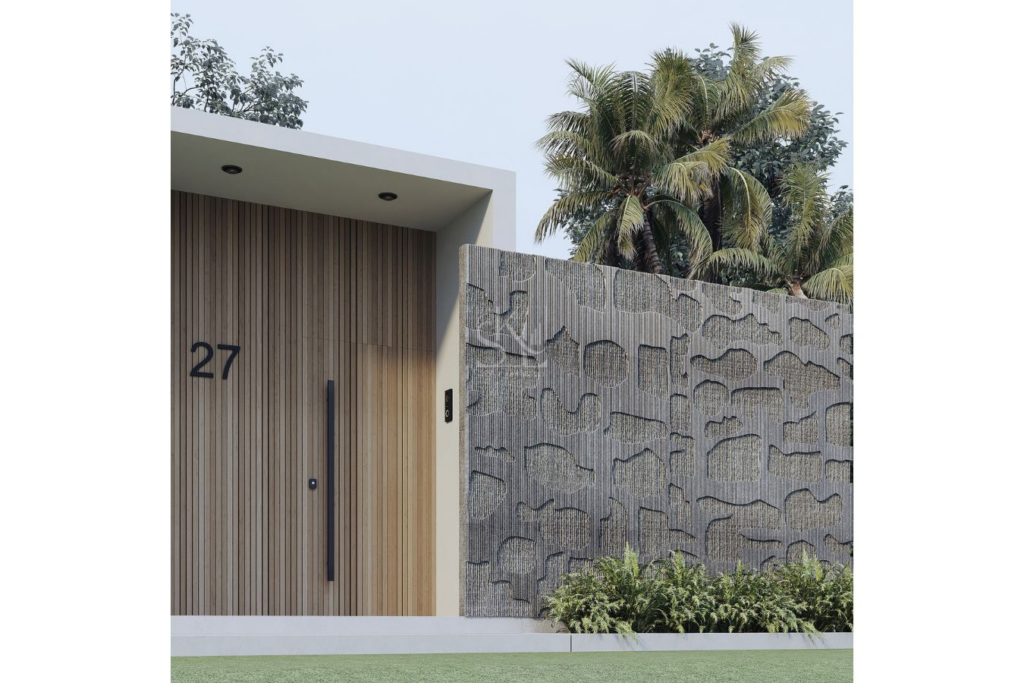
Semi-Chiselled Wall Design offers raw, textural beauty through hand-crafted stone surfaces that reveal the material’s authentic character. This interior double-height wall design technique leaves portions of the stone with rough, chiselled finishes while smoothing other areas, creating a striking contrast between refined and rustic elements. The varied surface catches and reflects light unpredictably, adding depth and visual intrigue to expansive vertical spaces. Particularly effective in modern double-height wall design with industrial or rustic influences, this approach celebrates natural stone’s inherent beauty. The tactile quality invites touch while the dramatic texture makes powerful architectural statements in both residential and commercial settings.
5. Sliced Wave Design Wall Cladding
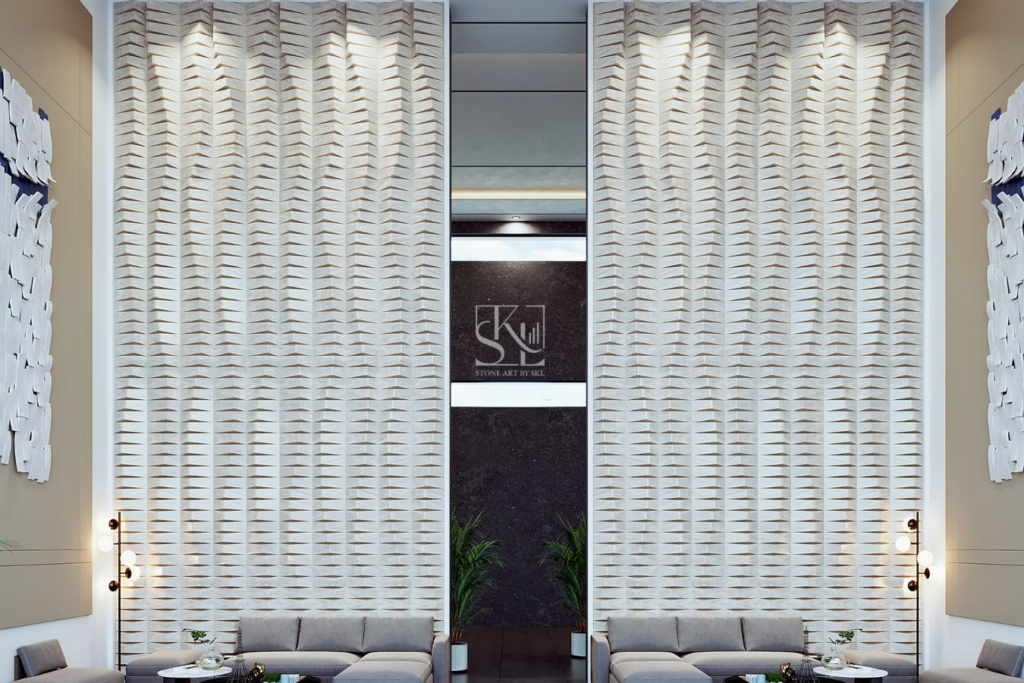
Sliced Wave Design Wall Cladding introduces fluid, horizontal movement to double-height wall design ideas through undulating stone patterns that mimic ocean waves or wind-sculpted dunes. The design features precisely cut stone pieces arranged to create continuous wave-like patterns that flow across the wall surface, adding kinetic energy to static spaces. This rhythmic design draws the eye horizontally before naturally lifting it upward, making it ideal for balancing the verticality of tall walls. Perfect for coastal-inspired or contemporary double-height living room design, the Sliced Wave brings natural dynamism indoors. The interplay of light across the wave contours creates ever-changing visual effects throughout the day.
6. Circular Design Wall Cladding
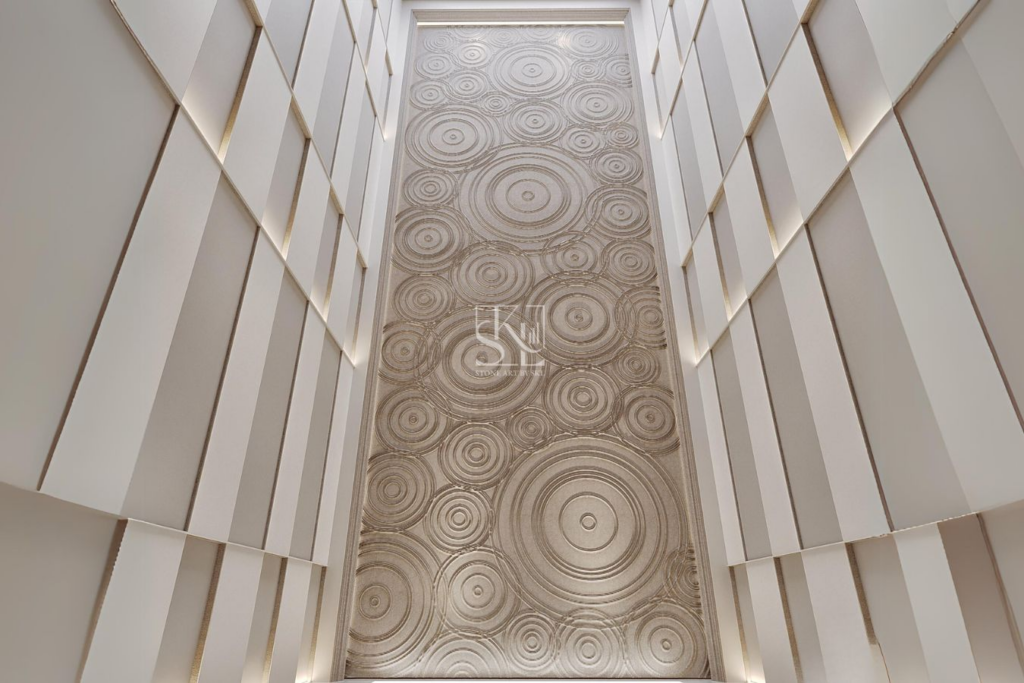
Circular Design Wall Cladding makes bold geometric statements through repeating circular motifs arranged in various patterns across double-height walls. This design can feature overlapping circles, concentric rings, or scattered circular elements that create visual rhythm and contemporary appeal. The geometric precision works beautifully in modern double-height wall design schemes, adding structured elegance without excessive ornamentation. Available in different scales from small, intricate circles to large, dramatic medallions, this versatile design adapts to various room sizes, including small double-height living room spaces. The circular elements can be raised, recessed, or flush-mounted, offering customisation options that align with your aesthetic vision and lighting plans.
7. Multiple Code Wall Design
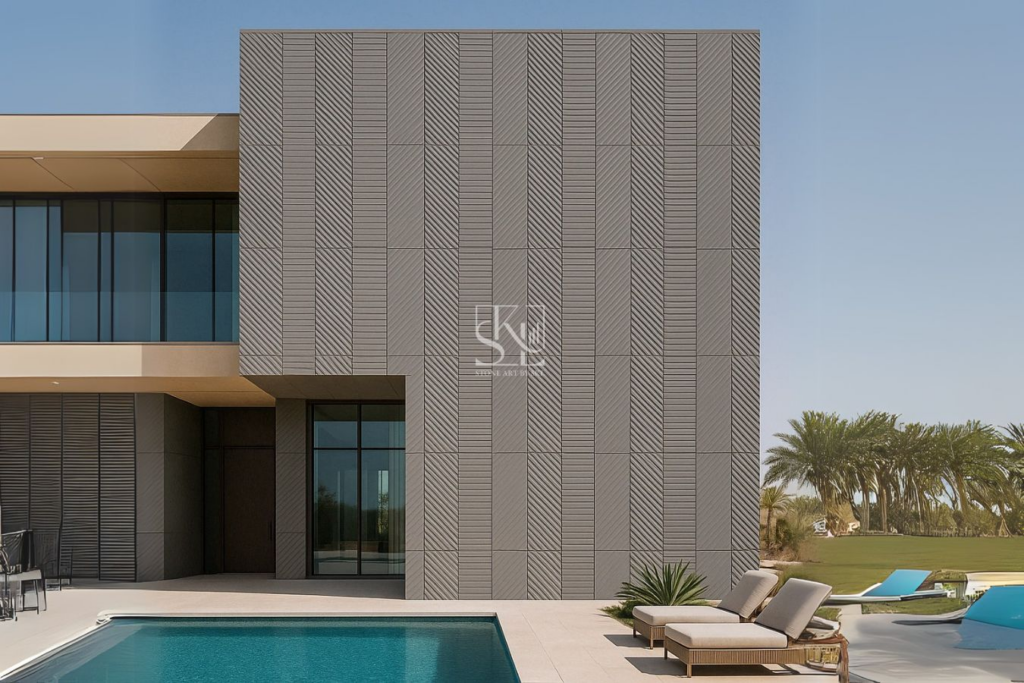
Multiple Code Wall Design incorporates intricate, systematic patterns that resemble digital codes, barcodes, or abstract linear sequences, bringing tech-inspired aesthetics to interior double-height wall design. This contemporary approach features vertical or horizontal lines of varying widths and depths, creating a sophisticated, almost cryptic visual language. Perfect for modern double-height wall design in urban lofts or minimalist homes, this design appeals to those seeking unique, conversation-starting features. The systematic arrangement creates order and structure, while the varying line weights add subtle complexity. When illuminated strategically, the design produces striking shadow effects that enhance its mysterious, contemporary character and complement sleek, modern furnishings.
8. Concave Fluting Wall Design
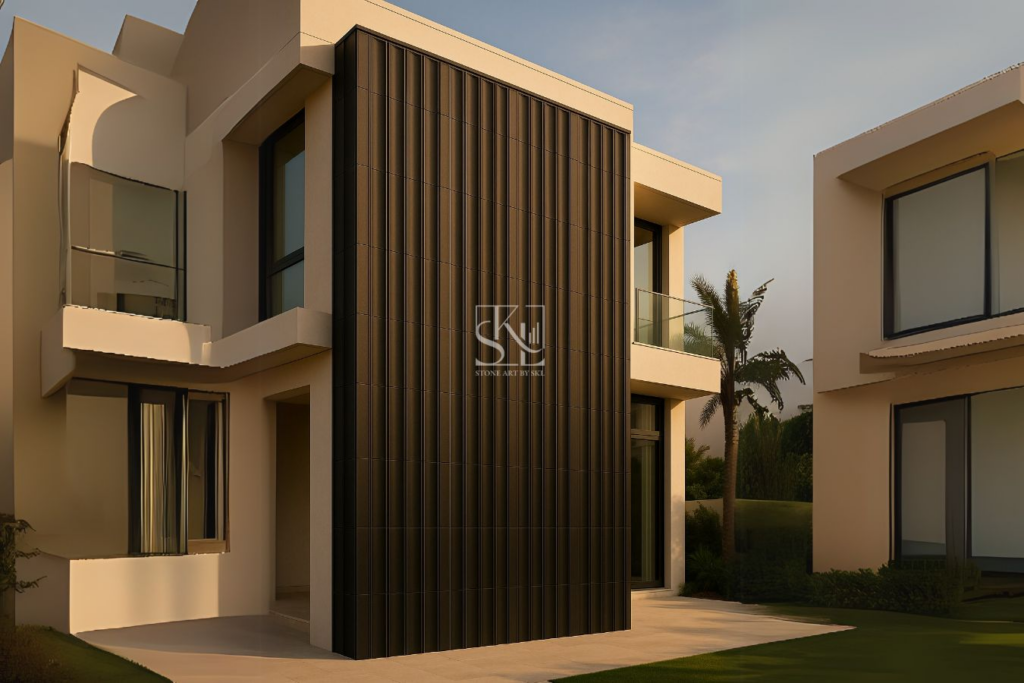
Concave Fluting Wall Design brings classical architectural elegance to a double-height living room design through vertical grooves that create refined, rhythmic patterns. Inspired by traditional column fluting, this design features parallel concave channels that run vertically, emphasising ceiling height while adding sophisticated texture. The grooves create linear shadow lines that enhance the sense of verticality, making rooms feel even more spacious. Ideal for luxury double-height living room settings with neoclassical or transitional styles, this timeless design bridges traditional and contemporary aesthetics. The fluting can vary in depth and width, from subtle grooves to dramatic channels, allowing customisation based on desired visual impact and stone type.
9. Nature’s Ballet Design
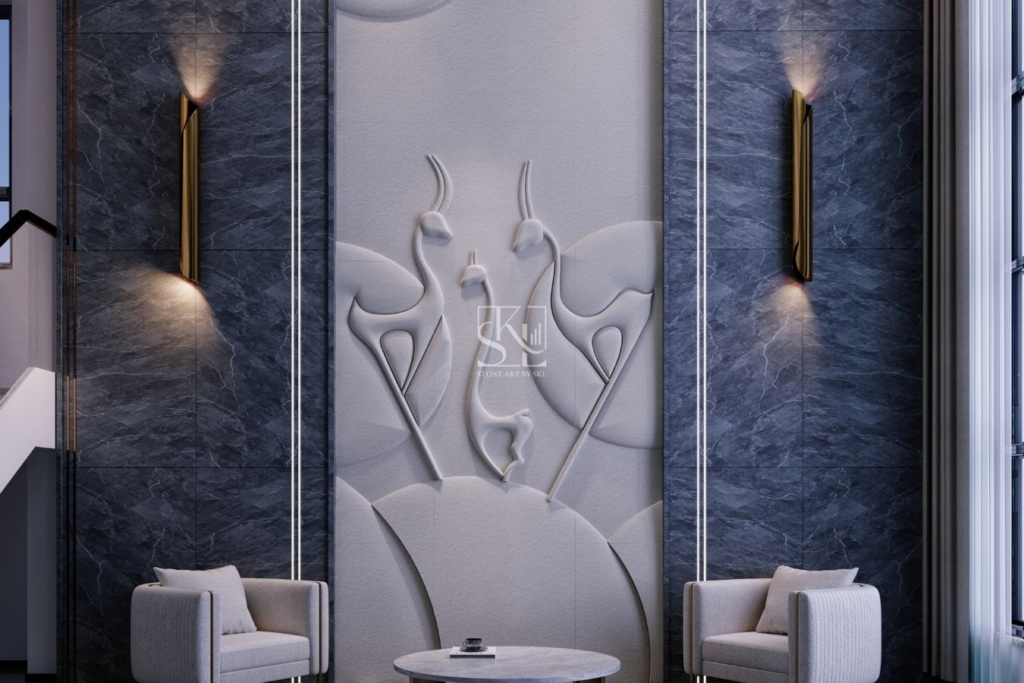
Nature’s Ballet celebrates organic movement through flowing, dance-like patterns carved into natural stone, creating double-height wall designs that feel alive with motion. This artistic approach features sweeping curves, graceful lines, and nature-inspired forms that seem to twist and flow across the wall surface. The design captures the elegance of wind through grass, water currents, or dancers in motion, bringing poetic beauty to interior spaces. Perfect for those seeking a unique interior double-height wall design that transcends conventional patterns, Nature’s Ballet transforms walls into sculptural art. The fluid forms soften angular architecture while adding sophisticated visual interest that changes perspective with different viewing angles and lighting conditions.
10. Parametric Rhythm Design
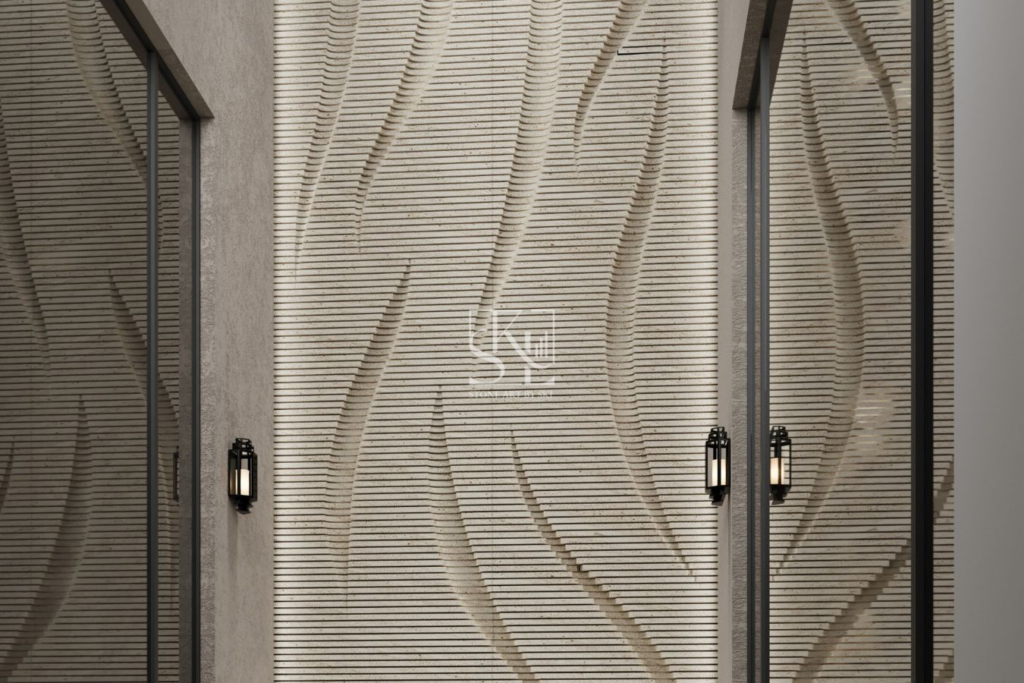
Parametric Rhythm Design represents cutting-edge double-height wall design ideas through algorithmically-inspired patterns that create complex, mathematically precise compositions. This contemporary approach features repeating geometric elements that gradually transform in size, angle, or density, creating mesmerising visual rhythms across the wall surface. Perfect for modern double-height wall design in architecturally progressive homes, this design appeals to those who appreciate the intersection of art, mathematics, and technology. The parametric patterns create depth through systematic variation, producing three-dimensional effects that engage viewers and reward closer inspection. This design choice makes powerful statements about innovation and forward-thinking design philosophy while maintaining functional elegance.
Design Principles for Double-Height Spaces
Proportion and Scale
Understanding proportion is essential in double-height living room design. Furniture, artwork, and decorative elements must be scaled appropriately to avoid appearing lost in the expansive vertical space. Anchor the room with substantial pieces, oversized sofas, large coffee tables, or statement rugs that define seating areas and ground the design.
Group furniture to create intimate conversation zones within the larger volume. This makes even spacious double-height living room plan layouts feel approachable and comfortable. Use tall plants, floor lamps, or sculptural objects to bridge the visual gap between furniture level and ceiling height.
Creating Visual Connection
Your double-height wall designs should create visual flow between the upper and lower portions of the space. Use colour, material, or pattern repetition to connect different heights. If you have a mezzanine, ensure the railings or balustrade relate to the design elements below. Artwork or architectural details that span multiple levels help unify the space.
Consider sight lines from various positions, both from ground level and from upper levels if applicable. The design should be interesting from all viewing angles, with no single perspective revealing awkward gaps or disproportionate elements.
Acoustic Considerations
Large volumes can create echo and sound issues that affect comfort. Incorporate soft furnishings, textured walls, or acoustic panels to manage sound. Area rugs, upholstered furniture, curtains, and fabric wall treatments all help absorb sound. These considerations are particularly important in modern double-height wall design schemes with hard surfaces like concrete or stone.
Strategic placement of absorptive materials prevents double-height living rooms from feeling cavernous or unwelcoming. Balance hard architectural elements with softer textiles to create acoustically comfortable spaces that feel as good as they look.
Heating and Cooling Efficiency
Vertical spaces present HVAC challenges, as warm air naturally rises. Work with your design to incorporate ceiling fans, destratification fans, or zoned heating and cooling systems. Interior double-height wall design can help by incorporating materials with thermal mass that moderate temperature fluctuations.
Consider how window treatments will affect temperature control. Solar shading for upper windows reduces heat gain in summer, while maximising winter sun penetration helps with passive heating. These practical considerations ensure your double-height living room design is comfortable year-round.
Combining Design Ideas
The most successful double-height wall designs often combine multiple approaches. You might pair a stone feature wall with integrated shelving and dramatic lighting, or combine floor-to-ceiling windows with vertical gardens along adjacent walls. The key is creating a cohesive design where elements complement rather than compete.
Start with one primary feature as your focal point, then layer additional elements that support and enhance it. In luxury double-height living room settings, this might mean a grand stone fireplace wall with symmetrical built-in shelving and a statement chandelier. For a modern double-height wall design, perhaps floor-to-ceiling windows paired with minimalist wood slat accents and contemporary art.
Consider your double-height living room plan carefully during the design phase. Map out where natural light enters, how traffic flows through the space, and where focal points should be positioned. This planning ensures all design elements work together harmoniously.
Maintenance and Accessibility
Practical maintenance considerations are crucial for double-height wall design ideas. Install fixtures and finishes that can be cleaned or serviced safely. For upper-level artwork, lighting, or decorative elements, plan for access using catwalks, scaffolding, or professional services during installation and periodic maintenance.
Choose durable materials that age well and don’t require frequent attention. Natural stone, quality wood panelling, and professional paint finishes provide longevity. For living walls, ensure built-in irrigation and design for easy plant replacement. Consider the lifespan of light fixtures and plan for bulb changes or fixture updates.
Personalising Your Space
While these double-height wall design ideas provide starting points, the most successful spaces reflect individual personality and lifestyle. Consider how you use your living room for entertaining, family gatherings, quiet relaxation, or multiple functions. Your design should support these activities while expressing your aesthetic preferences.
Incorporate meaningful objects, family photos, collections, or artwork that tell your story. Even in modern double-height wall design schemes, personal touches prevent spaces from feeling sterile or show-home-like. The grandeur of double-height living room design becomes truly special when it frames your life and experiences.
Conclusion:
Double-height living room design presents exciting opportunities to create dramatic, memorable spaces that serve as the heart of your home. Whether you gravitate toward modern minimalism, traditional elegance, or eclectic luxury double-height living room styles, the vertical dimension allows for creativity and expression impossible in standard-height rooms.
From natural stone feature walls to living gardens, from statement lighting to floor-to-ceiling windows, these top 10 double-height wall design ideas offer diverse approaches to maximising your space’s potential. Success lies in thoughtful planning, appropriate scale, and creating designs that balance visual impact with comfort and functionality.
Remember that your double-height living room plan should enhance daily life while impressing guests. By carefully considering proportion, lighting, acoustics, and personal style, you can create an interior double-height wall design that feels both grand and welcoming, a space that elevates everyday moments into extraordinary experiences.
Frequently Asked Questions
Q: What is the ideal height for a double-height living room?
A: Double-height living rooms typically range from 16 to 24 feet (approximately 5 to 7.5 meters) in height. The exact measurement depends on your home’s overall design, but anything above 16 feet creates the dramatic vertical space characteristic of double-height living room design. Small double-height living room designs might be on the lower end, while luxury double-height living room spaces often exceed 20 feet.
Q: How do I make a double-height living room feel cosy?
A: Create intimate seating zones with appropriately scaled furniture, use warm lighting at multiple levels, incorporate soft textiles like rugs and curtains, and add textured wall treatments. Avoid leaving walls completely bare, use artwork, shelving, or architectural details to bring visual interest down to eye level. In interior double-height wall design, breaking up the vertical expanse with horizontal elements helps create cosiness.
Q: Are double-height living rooms expensive to heat and cool?
A: They can be, but proper design mitigates costs. Install ceiling fans to circulate air, use zoned HVAC systems, choose energy-efficient windows with appropriate glazing, and consider radiant floor heating. Modern double-height wall design can incorporate materials with thermal mass that help regulate temperature. Strategic window placement for cross-ventilation also reduces mechanical cooling needs.
Q: Can I add a double-height living room to an existing home?
A: Yes, though it requires significant structural work. You’ll need to remove floor/ceiling joists between levels and potentially reinforce surrounding structures. Consult with a structural engineer and architect to determine feasibility. The investment can dramatically transform your space, making it worthwhile for many homeowners seeking a dramatic double-height living room design.
Q: What type of curtains work best in double-height living rooms?
A: Motorised curtains are ideal for practicality, allowing easy operation of floor-to-ceiling treatments. Choose fabrics that complement your double-height wall designs. Sheer fabrics maintain light flow while providing privacy, while heavier materials add drama and improve acoustics. Consider layering sheers with blackout curtains for flexibility. Custom-made curtains ensure proper proportions for your space.
Q: Should I use the same flooring throughout a double-height living room?
A: Generally, yes, consistent flooring creates visual flow and makes spaces feel larger. However, you can define zones with area rugs. If your double-height living room plan includes a mezzanine, the upper level might use different flooring, but maintain some connection through colour or material choice. Consistent flooring simplifies the design palette, allowing double-height wall designs to be the focus.
Q: How important is lighting in double-height living room design?
A: Extremely important. Lighting must serve practical needs while enhancing the architectural drama. Layer ambient lighting (recessed ceiling lights), task lighting (reading lamps, under-shelf lights), and accent lighting (artwork illumination, wall washing). Statement fixtures scaled to the space become design features themselves. Plan for different lighting scenes to change the mood, bright for entertaining, subdued for evening relaxation.