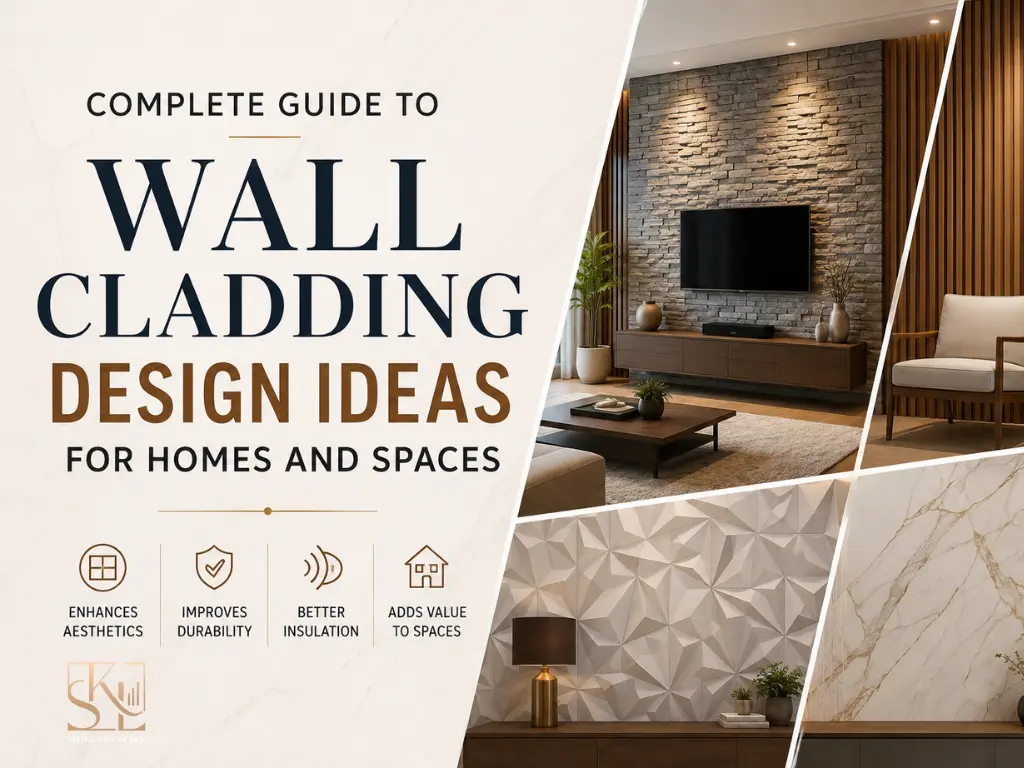
There’s a moment in every renovation project when a plain wall stops feeling like a blank canvas and starts feeling like a missed opportunity.
Paint fades. Wallpaper peels. Standard tiles repeat themselves into monotony. And yet, walls are the most dominant surface in any room, the backdrop against which every piece of furniture, every light fixture, and every design decision is judged.
This is where the right wall cladding design makes all the difference.
Wall cladding transforms an ordinary surface into a defining feature of a space. It introduces depth, texture, shadow, and character qualities that no coat of paint can replicate. And when it’s executed in natural stone, it brings something far more powerful: a material that has been shaped by the earth itself, carrying a beauty that only deepens with time.
Whether you’re designing a contemporary apartment in Dubai, a luxury villa in Europe, a resort property in Southeast Asia, or a private residence anywhere in the world, this guide will walk you through everything you need to make the right wall cladding decision.
What Is Wall Cladding?
Wall cladding design is the application of a material layer over an existing wall for protection, insulation, or, most commonly today, for aesthetic transformation.
Unlike flat tiles, cladding introduces relief and dimension. It can be smooth or deeply textured, geometric or organic, restrained or boldly sculptural. The material you choose, stone, composite, metal, or wood, determines both the visual outcome and the long-term performance of the cladding.
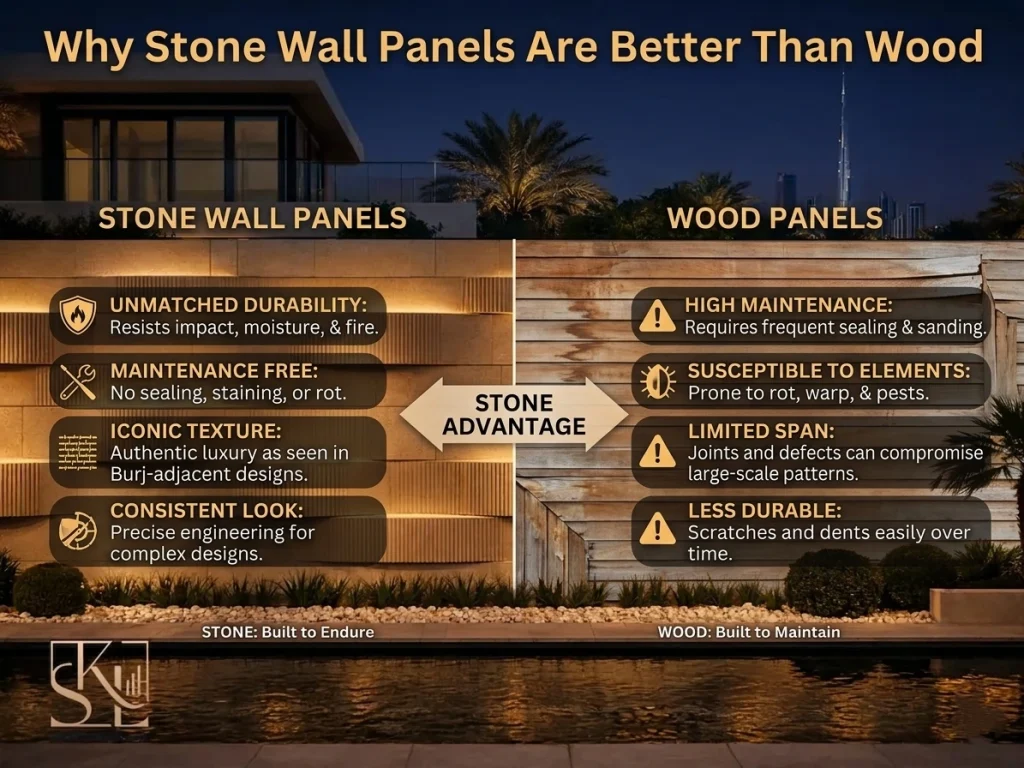
Among all available options, natural stone wall cladding remains the most enduring choice globally. Stone is weather-resistant, dimensionally stable, non-toxic, and genuinely low-maintenance. More importantly, it looks better as it ages, something very few building materials can claim.
Interior Wall Cladding: Room-by-Room Design Thinking
Interior wall cladding gives designers and homeowners remarkable flexibility to shape the mood of each room independently. Here’s how to think about it, space by space.
Living Rooms and Lounges
The living room is where wall cladding delivers the most immediate impact. A single cladded feature wall can anchor the entire room, reducing the need for heavy furniture or elaborate décor to fill the space visually.
Fluting patterns are among the most popular choices for living room walls globally and with good reason. The vertical grooves create rhythm, draw the eye upward, and shift dramatically with natural and artificial light throughout the day. Fluting designs in sandstone or marble, such as the Sandstone Fluting, Concave Fluting, or the Ripple Flute series, bring sculptural quality to a wall without overwhelming the space. For those who want something more expressive, nature-inspired carvings, Bamboo Design, Bird Design, Forest Design, or Botanical Symphony, turn a wall into a piece of art. These designs work particularly well in spaces with high ceilings or generous wall widths.
Entryways and Foyers
The entrance to a home or building communicates identity before anything else is said. This is where classic and geometric patterns make their strongest case.
A Motif Arch Design or a Book Matched Fluting panel on the entry wall signals craftsmanship and considered design from the first moment. For grander entrances, the Marble Brass Inlay Design or the Brass Inlay Design adds a warmth and richness that feels genuinely luxurious, not decorative for decoration’s sake.
Bedrooms
Bedroom walls call for texture that calms. The goal is tactile richness without visual busyness.
Stone textures, such as the Textured Limestone Surface, Bone Textured Marble, Soft Arc Design, or the Linen Finish series, are ideal behind the bedhead wall. They add warmth and depth while maintaining the quiet that a good bedroom demands. These designs also photograph beautifully, which is relevant for both residential and hospitality projects.
Home Offices and Workspaces
Stone cladding in a professional workspace is still an underutilised design move. A subtle Rock Finish Design, a Linear Texture Stone, or a Weave Texture Stone panel behind your desk creates a focused, grounded backdrop. It also elevates the aesthetic of video calls considerably, a detail that matters more now than it ever has
Staircases and Transitional Corridors
Staircase walls and corridors are often treated as afterthoughts. They shouldn’t be. These transitional spaces create the visual rhythm of a home as you move through it. Geometric patterns, such as the Zigzag Design, Hexagonal Pattern, Parametric Design, or Circular Grid, create a layered visual experience that unfolds as you move through the space. They work beautifully in both residential and commercial environments
Exterior Wall Cladding: Performance Meets Design
Exterior wall cladding has to earn its place twice, once aesthetically and once structurally. It needs to be beautiful on day one and still performing twenty years later.
This is where natural stone cladding has a clear, permanent advantage over synthetic alternatives.
Stone doesn’t warp in heat. It doesn’t crack in frost. It doesn’t fade under UV exposure or peel in rain. The natural stone cladding range, including Ledgestone, Stacked Stone, Dimensional Ledgestone, Quarry Ledgestone, Castle Ledgestone, and Crazy Stone, is engineered for exterior performance without sacrificing design intent.
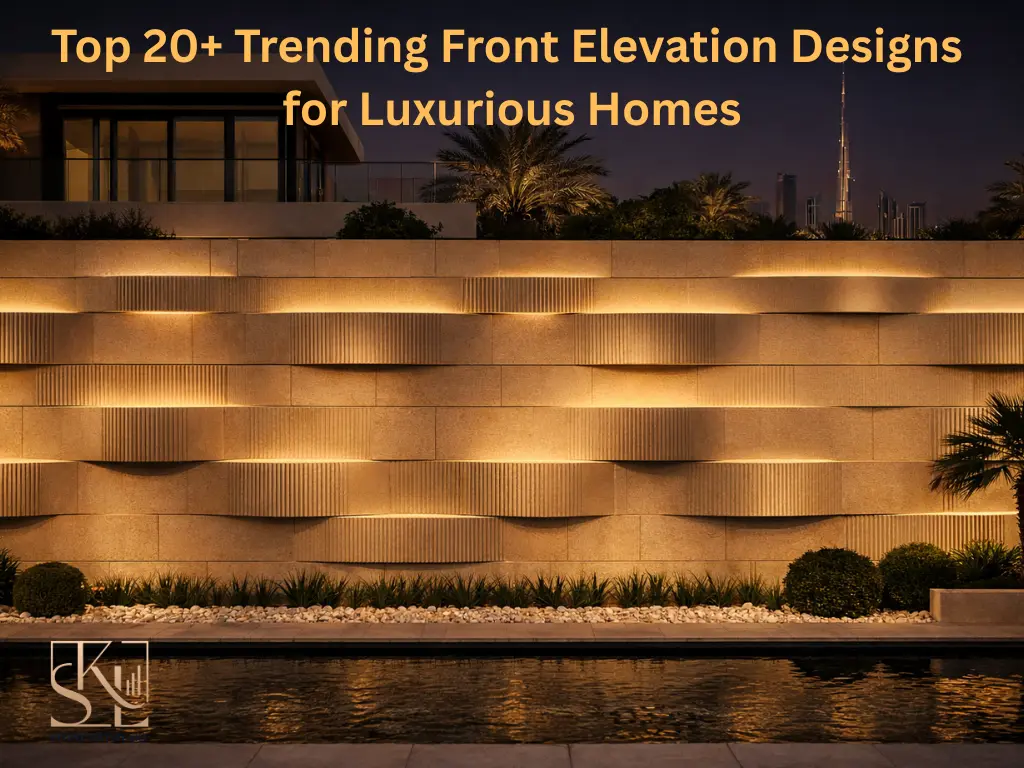
For residential facades, exterior stone cladding communicates quality from the street. For commercial buildings, hotels, and resort properties, it establishes a material vocabulary that speaks of permanence and investment. Red Sandstone and Grey Sandstone Rock Finish panels are especially versatile for exteriors, they read naturally in any landscape, from coastal to urban to mountainous settings.
Boundary walls, compound gates, and landscape features benefit equally. Stone cladding on these elements ties the exterior environment together as a coherent whole rather than a collection of disconnected surfaces.
Wall Cladding Design Styles: Finding Your Direction Modern and Minimalist Spaces
Modern wall textures should feel intentional, not decorative. Wave designs the Random Wave, Liquid Wave, or Aqua Lines Wall Design, which introduces organic movement into an otherwise clean environment. The 3D Design Marble Wall Cladding or the Curved Fluted Strips Design works well when the wall is meant to be the single focal element in an otherwise restrained room.
Contemporary and Urban Interiors
For apartments and urban homes where design language borrows from global trends, abstract and geometric forms deliver the right balance of personality and discipline. The Abstract Design series, Semi-Chiselled Wall Design, and Staggered Curve Design sit comfortably in spaces that are modern but not cold, designed but not overdone.
Luxury Residential and Hospitality
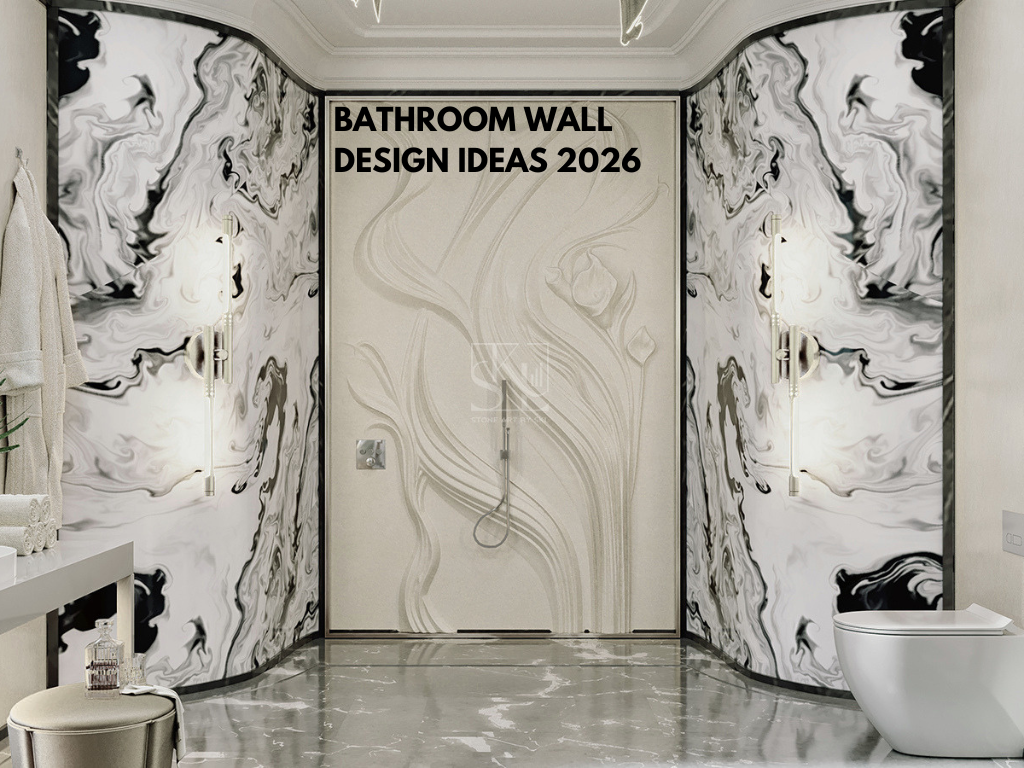
In premium residential projects and luxury hospitality environments, the cladding needs to carry both visual weight and tactile quality. Marble surfaces, V-Shape Marble, Boomerang Textured Marble, and Marble Petal Design deliver the presence that genuine stone always communicates. The Brass Inlay Design and the Marble Brass Inlay panel add a layer of warmth and material contrast that distinguishes truly considered interiors from merely expensive ones.
Organic and Resort-Style Design
For properties that celebrate the landscape, beach houses, mountain retreats, countryside estates, or eco-resorts, Crazy Stone, Spider Stone, and Castle Ledgestone from the natural stone range bring raw, grounded beauty. These are designs that feel as if the wall has grown from the land rather than been applied to it.
Traditional and Heritage-Inspired Architecture
Classic carved patterns have defined significant architecture across cultures for centuries. The Motif Arch Design, Buddha Sculpture Wall Cladding, and the Layered Labyrinth Design carry that sense of heritage forward without feeling anachronistic. They belong in spaces where history is honoured, such as villas, heritage hotels, cultural institutions, and residential projects with classical architectural references.
Decorative Stone Cladding vs. Natural Stone Cladding: Understanding the Difference
These two categories are often confused, and it’s worth drawing a clear distinction.
Decorative wall cladding consists of carved stone panels, typically marble, sandstone, or granite, crafted into patterns, relief designs, fluting, and sculptural motifs. These are the Bamboo Designs, Geometric Patterns, Wave series, Fluting collections, and Stone Texture panels that Stone Art by SKL specialises in. They function as art as much as architecture.
Natural stone cladding uses stone in a more elemental, less processed form, layered or fitted to replicate the appearance of natural rock formations. Ledgestone, Stacked Stone, and Quarry Ledgestone fall into this category. They’re rugged, deeply textural, and ideal for spaces where the raw character of stone itself is the design statement.
The most compelling interiors often use both decorative carved panels in interior feature areas, natural stacked stone for exterior facades or garden walls. The two complement each other when used with intention.
Practical Considerations Before You Choose
Scale and proportion. Large-format patterns, such as the Parametric Wave Design, the 3D Circle Square Design, or the Mountain Design Wall Cladding, need wall area to breathe. On a small wall, intricate large-scale patterns can feel claustrophobic. On a generous surface, they’re spectacular.
Lighting is half the design. Stone cladding performs differently under different lights. Fluting and textured surfaces create strong shadow play under directional spotlights. Polished marble surfaces reflect ambient light softly. Consider your lighting plan alongside your cladding choice, the two are inseparable.
Indoor versus outdoor specification. Not all stone panels are appropriate for all locations. Always confirm with your supplier whether a specific product is specified for interior use, exterior use, or both. Stone Art by SKL’s natural stone range is designed for exterior performance; the decorative cladding range serves interior applications with equal strength.
Installation and backing. Natural stone has weight, and proper installation requires experienced professionals and appropriate backing materials. Done correctly, stone cladding is permanent and essentially maintenance-free. Cutting corners on installation is the only way stone cladding ever underperforms.
Closing Thoughts
A wall is never just a wall. In any space that has been thoughtfully designed, the walls define the experience just as much as the furniture, the light, and the views.
The right wall cladding design takes a surface from background to foreground, making it the element that visitors remember, the detail that architects reference, and the quality that homeowners appreciate more with every passing year.
Natural stone earns that confidence over every other material. It is durable, ageless, and honest in the way that only something formed by the earth can be.
Explore the full collection of decorative wall cladding designs and natural stone cladding at Stone Art by SKL, over 184 designs across modern, geometric, classic, fluting, nature-inspired, and stone texture categories and find the wall cladding that your space has been waiting for.
Frequently Asked Questions
Can wall cladding be applied over an existing wall without demolition?
Yes. In most cases, cladding can be installed over a prepared existing wall surface. This makes it a practical choice for both new builds and renovation projects.
What wall cladding design works best for luxury interiors?
Marble surface designs, brass inlay cladding, and deeply textured fluting patterns consistently perform best in premium interior environments. They combine visual presence with genuine material quality.
Is natural stone cladding suitable for all climates?
Yes. Natural stone, particularly granite, sandstone, and limestone, is inherently suited to a wide range of climates. Stone handles heat, cold, humidity, and precipitation better than most building materials.
How do I maintain stone wall cladding long-term?
Interior stone cladding requires very little occasional dusting or wiping with a damp cloth. Exterior cladding benefits from periodic cleaning and, depending on the stone type, sealing every few years to maintain appearance and water resistance.
What is the difference between fluting cladding and stacked stone cladding?
Fluting cladding involves carved stone panels with linear grooves, and relief is a crafted, designed product. Stacked stone cladding replicates the natural layering of rock formations. It’s raw and elemental. Both are stone; the difference is in the level of craft and the design intent.